Day Training
Camp for Dogs
Day Training Camp
for Dogs
Do you come home from work to a dog who is overly excited, bursting with pent-up energy, bored, or destructive?
With today’s busy schedules, it can be difficult to consistently provide the exercise, structure, and training our dogs truly need to thrive. Even the most well‑intentioned dog owners can feel stretched thin.
That’s where Achieve Obedience Academy’s
Day Training comes in.
Do you come home from work to a dog who is overly excited, bursting with pent-up energy, bored, or destructive?
With today’s busy schedules, it can be difficult to consistently provide the exercise, structure, and training our dogs truly need to thrive. Even the most well‑intentioned dog owners can feel stretched thin.
That’s where Achieve Obedience Academy’s Day Training comes in.
What is a Day Training?
Day Training is a structured, enrichment‑based learning program where your dog spends the day working directly with a professional, certified trainer—not just burning energy, but building skills.
While you’re at work, your dog enjoys a purposeful day that may include:
Fun, engaging training games
Practicing polite manners and impulse control
Learning new skills and cues
Practicing polite manners and impulse control
Reinforcing house training and real-life behaviors
Leashed group training sessions focused on neutrality, engagement, and calm behavior
Leashed adventure walks for mental and physical enrichment
Structured rest periods to prevent overstimulation
There is no un-controlled group play at Day Training.
All dog-to-dog interaction is intentional and trainer-led.
Your dog returns home fulfilled, calmer, and mentally satisfied—not just exhausted.
What is a Day Training?
Day Training is a structured, enrichment‑based learning program where your dog spends the day working directly with a professional, certified trainer—not just burning energy, but building skills.
While you’re at work, your dog enjoys a purposeful day that may include:
Fun, engaging training games
Practicing polite manners
and impulse control
Learning new skills and cues
Practicing polite manners
and impulse control
Reinforcing house training
and real-life behaviors
Leashed group training sessions focused on neutrality, engagement, and calm behavior
Leashed adventure walks for mental and physical enrichment
Structured rest periods to
prevent overstimulation
There is no un-controlled group play at Day Training. All dog-to-dog interaction is intentional and trainer-led.
Your dog returns home fulfilled, calmer, and mentally satisfied—not just exhausted.
Day Training at AOA
✔ Small, carefully managed groups
✔ Leashed and Off-Leash group training sessions only
(no uncontrolled group play)
✔ Trainer-guided structure throughout the day
✔ Focus on learning, confidence, neutrality, and calm behavior
✔ Balanced physical activity and mental enrichment with built-in rest
All dog-to-dog interaction is intentional, structured, and conducted in
small groups of 2-3 dogs while directly supervised by a trainer.
Ideal for dogs who:
✔ Get overstimulated or stressed in traditional daycare
✔ Prefer working with people over free-for-all dog play
✔ Need help with manners, confidence, reactivity, or impulse control
✔ Benefit from predictable routines and clear expectations
Day Training isn’t about chaos—it’s about quality engagement.
Day Training at AOA
✔ Small, carefully managed groups
✔ Leashed and Off-Leash group training sessions only
(no uncontrolled group play)
✔ Trainer-guided structure throughout the day
✔ Focus on learning, confidence, neutrality, and calm behavior
✔ Balanced physical activity and mental enrichment with built-in rest
All dog-to-dog interaction is intentional, structured, and conducted in small groups of 2-3 dogs while directly supervised by a trainer.
Ideal for dogs who:
✔ Get overstimulated or stressed in traditional daycare
✔ Prefer working with people over free-for-all dog play
✔ Need help with manners, confidence, reactivity, or impulse control
✔ Benefit from predictable routines and clear expectations
Day Training isn’t about chaos—it’s about quality engagement.
LIMA & CCPDT Standards
At Achieve Obedience Academy, all training is guided by the LIMA framework (Least Intrusive, Minimally Aversive) as defined by the Certification Council for Professional Dog Trainers (CCPDT).
What Does LIMA Mean?
LIMA is an evidence-based, ethical approach to dog training that prioritizes:
• Your dog’s emotional and physical well-being
• Clear communication and learning
• Safety for dogs, owners, and the public
Training always begins with the least intrusive methods reasonably likely to be effective and progresses only as necessary to support learning, safety, and behavior change. Decisions are made based on each dog’s individual needs, history, and environment—not a one-size-fits-all approach.
Transparency, Comfort and Trust
We believe owners should feel confident and comfortable knowing exactly
how their dog is being trained at all time
During Day Training, methods and tools may include:
• Food rewards and play-based reinforcement
• Verbal markers and praise
• Leashes, long lines, harnesses, and head halters
• Management tools such as crates, gates, barriers, and controlled setups
• Safety equipment such as muzzles (used only for safety, never as punishment)
These tools are used to teach skills, build confidence, and create clarity, not to intimidate or suppress behavior.
LIMA & CCPDT Standards
At Achieve Obedience Academy, all training is guided by the LIMA framework (Least Intrusive, Minimally Aversive) as defined by the Certification Council for Professional Dog Trainers (CCPDT).
What Does LIMA Mean?
LIMA is an evidence-based, ethical approach to dog training that prioritizes:
• Your dog’s emotional and physical well-being
• Clear communication and learning
• Safety for dogs, owners, and the public
Training always begins with the least intrusive methods reasonably likely to be effective and progresses only as necessary to support learning, safety, and behavior change. Decisions are made based on each dog’s individual needs, history, and environment—not a one-size-fits-all approach.
Transparency, Comfort and Trust
We believe owners should feel confident and comfortable knowing exactly how their dog is being trained at all times.
During Day Training, methods and tools may include:
• Food rewards and play-based reinforcement
• Verbal markers and praise
• Leashes, long lines, harnesses, and head halters
• Management tools such as crates, gates, barriers, and controlled setups
• Safety equipment such as muzzles (used only for safety, never as punishment)
These tools are used to teach skills, build confidence, and create clarity, not to intimidate or suppress behavior.
What We WillNever Use
Punishment-heavy techniques and purely aversive tools are not part of our program. Achieve Obedience Academy will never use:
- Electronic or shock collars
- Prong collars
- Choke chains
- Intimidation, fear-based handling, or pain-based corrections
We do not believe these methods align with ethical training, long-term behavior change, or healthy human–dog relationships.
WhyThis Matters
Dogs learn best when they feel safe, understood, and supported. LIMA-based training helps dogs:
-
Think through challengesinstead of reacting emotionally.
-
Build trustwith their handlers.
-
Develop lasting skillsthat carry over into real life.
Owners can feel confident knowing their dog is learning in a way that is humane, effective, and respectful.
Possible DayTrainingActivities
Day Training is designed to be engaging, enriching, and enjoyable, while still maintaining structure, safety, and purpose. Activities are selected based on each dog’s individual needs, age, energy level, and comfort, and are always trainer-led and thoughtfully planned.
Fun, structured activities may include:
- Scent games and nose work to encourage natural problem-solving and mental enrichment.
- Leash skills practice, including polite walking, engagement, and responsiveness.
- Agility-style obstacles and movement games designed for confidence, coordination, and body awareness (not speed or competition).
- Dog “arts and crafts” activities that promote curiosity, creativity, and positive interaction with novel objects.
- Solo toy play to encourage independent engagement and appropriate play skills.
- Leashed decompression walks that allow dogs to explore their environment calmly and at their own pace.
Off-CampusExperiences
Participation in off-campus, leashed park walks and controlled public-environment outings is an optional component of Day Training. These outings provide valuable real-world learning opportunities, such as practicing calm behavior, leash skills, and focus in new environments.
All off-campus activities are:
- Conducted on leash
- Carefully supervised by professional trainers
- Optional and based on owner authorization and the dog’s suitability
Our goal is to make each day productive, enriching, and enjoyable, combining learning with fun in a way that supports confidence, good behavior, and overall well-being.
Body Awareness, Confidence & Functional Enrichment
A key component of Day Training is helping dogs develop body awareness, physical confidence, and trust—both in their environment and in the people guiding them.
Many behavior challenges stem not from disobedience, but from dogs feeling unsure of their bodies or uncertain in new situations. By intentionally teaching dogs how to move, balance, and problem-solve, we help them navigate the world with greater ease and confidence.
How We Build Body Awareness & Confidence
A key component of Day Training is helping dogs develop body awareness, physical confidence, and trust—both in their environment and in the people guiding them.
Many behavior challenges stem not from disobedience, but from dogs feeling unsure of their bodies or uncertain in new situations. By intentionally teaching dogs how to move, balance, and problem-solve, we help them navigate the world with greater ease and confidence.
Navigating low, safe obstacles and balance equipment
Exploring novel surfaces with different textures, heights, and footingce equipment
Gentle, age-appropriate stretching and conditioning exercises
Slow, thoughtful movement games that encourage coordination and control
WhyThis Matters
These exercises provide more than physical movement—they offer meaningful enrichment that helps dogs:
- Build confidence when faced with unfamiliar situations
- Learn how to think through challenges calmly
- Develop trust in human handling and guidance
- Improve emotional regulation and resilience
Dogs who understand how their bodies move tend to feel safer and more capable in the world around them.
Real-LifeBenefits
Improved body awareness and conditioning often translate into everyday advantages, including dogs who are:
- More comfortable being handled, groomed, and examined
- Less stressed during veterinary visits
- More confident navigating new places, surfaces, and environments
- Better able to recover from startle responses or uncertainty
By incorporating body awareness and confidence-building into Day Training, we support not just better behavior—but healthier, happier, more adaptable dogs.
Setting the Foundation for Life
Raising a puppy is exciting—but it can also be time-consuming, overwhelming, and exhausting. Between socialization, house training, crate training, and teaching good manners, many owners find it hard to keep up, even with the best intentions.
At Achieve Obedience Academy, we understand how critical the early months of a puppy’s life are—and we have the knowledge, structure, and tools to help you give your puppy the best possible start.
Why Day Training Is Especially Valuable for Puppies
Puppies go through a critical socialization window, generally from around 3 to 16 weeks of age, when their brains are especially open to learning about the world. Experiences during this time shape how your puppy responds to:
• New people
• Other dogs
• Novel environments
• Sounds, sights, surfaces, and movement
• Mild stressors and unexpected situations
Positive, well-managed exposure during this window helps puppies grow into confident, resilient, and emotionally stable adult dogs.
Setting the Foundation for Life
Raising a puppy is exciting—but it can also be time-consuming, overwhelming, and exhausting. Between socialization, house training, crate training, and teaching good manners, many owners find it hard to keep up, even with the best intentions.
At Achieve Obedience Academy, we understand how critical the early months of a puppy’s life are—and we have the knowledge, structure, and tools to help you give your puppy the best possible start.
Why Day Training Is Especially
Valuable for Puppies
Puppies go through a critical socialization window, generally from around 3 to 16 weeks of age, when their brains are especially open to learning about the world. Experiences during this time shape how your puppy responds to:
• New people
• Other dogs
• Novel environments
• Sounds, sights, surfaces, and movement
• Mild stressors and unexpected situations
Positive, well-managed exposure during this window helps puppies grow into confident, resilient, and emotionally stable adult dogs.
In Day Training, puppy socialization is intentional and trainer-led.
Rather than uncontrolled group play, puppies participate in leashed group training sessions that focus on:
• Calm exposure to other dogs
• Learning to coexist without overstimulation
• Building confidence around distractions
• Developing appropriate social skills
This approach helps prevent fear, reactivity, and frustration later in life.
In Day Training,
puppy socialization is intentional and
trainer-led.
Rather than uncontrolled group play, puppies participate in leashed group training sessions that focus on:
• Calm exposure to other dogs
• Learning to coexist without overstimulation
• Building confidence around distractions
• Developing appropriate social skills
This approach helps prevent fear, reactivity, and frustration later in life.
Building Focusin a Distracting World
One of the most important skills a puppy can learn is how to stay engaged with their handler, even when the environment feels exciting, confusing, or scary.
Through structured training games and real-world practice, puppies learn:
- To check in with people instead of reacting
- To recover quickly from startling experiences
- That their handler provides guidance and safety
These skills form the foundation for reliable behavior, emotional regulation, and strong communication as your puppy matures.
Foundation SkillsThat Matter
During Day Training, puppies work on essential life skills such as:
- Crate training and calm confinement
- House training reinforcement
- Polite greetings and impulse control
- Basic cues and engagement skills
- Learning how to relax around distractions
All training is age-appropriate, positive, and guided by our LIMA-based training philosophy.
Puppy Socialization,Health & Safety Standards
Leading veterinary behavior organizations, including the American Veterinary Society of Animal Behavior (AVSAB), emphasize that early socialization is critically important for puppies—even before they are fully vaccinated. According to AVSAB, the risk of developing serious behavior problems due to insufficient or delayed socialization can outweigh the risk of infectious disease when puppies are exposed thoughtfully and responsibly.
The critical socialization window occurs early in a puppy’s life, and experiences during this time strongly influence how a dog responds to people, other dogs, new environments, sounds, and handling throughout adulthood. Carefully managed, positive exposure during this period helps puppies grow into confident, resilient, and well-adjusted dogs.
How We MinimizeHealth Risks
At Achieve Obedience Academy, puppy safety is taken seriously. Early socialization is provided in a controlled, structured environment, not through uncontrolled group play.
We follow AVMA-recommended, industry-standard, veterinary-grade cleaning and disinfecting protocols, including:
- Routine disinfection of shared spaces and equipment
- Use of veterinary-approved disinfectants
- Structured scheduling and thoughtful management of dog interactions
While no environment involving animals can ever be completely risk-free, these practices significantly reduce health risks while allowing puppies to receive the social and developmental experiences they need.
All Day Training participants are required to have age-appropriate vaccinations.
For puppies, this includes:
A minimum of two rounds of Distemper/Parvovirus (DHPP) vaccines appropriate for their age.
We encourage all owners to work closely with their veterinarian regarding their puppy’s vaccination schedule and overall health.
By balancing early, appropriate socialization with strong health and sanitation protocols, we support both the behavioral development and physical well-being of every puppy in our care.
You Don’t Have to Do It Alone
Raising a well-socialized, well-mannered puppy takes time, consistency, and support—and it’s normal to feel overwhelmed.
Day Training allows your puppy to learn and practice critical skills during the day, while you focus on work and life, knowing your puppy is in capable, professional hands.
Not sure if your puppy is ready for Day Training?
We’re happy to help you decide and tailor a plan that
supports both you and your puppy.
You Don’t Have
to Do It Alone
Raising a well-socialized, well-mannered puppy takes time, consistency, and support—and it’s normal to feel overwhelmed.
Day Training allows your puppy to learn and practice critical skills during the day, while you focus on work and life, knowing your puppy is in capable, professional hands.
Not sure if your puppy is ready for Day Training?
We’re happy to help you decide and tailor a plan that
supports both you and your puppy.
Is Day Training
Right for Your Dog?
Day Training is a great fit for dogs who:
• Have excess energy or boredom
• Need help with manners or impulse control
• Struggle in traditional daycare environments
• Benefit from structured learning
• Enjoy working with people
• Need consistent reinforcement of good habits
We know convenience matters.
Shuttle Transportation Available
Pickup: Between 7:00–10:00 AM
Drop‑off: Between 5:00–7:00 PM
You may:
- Hand off your dog in person
- Leave a key or door code
- Or transport your dog to the facility yourself
For your dog’s safety, all transported dogs ride in crash‑rated, professional dog crates. Shuttle rides are available within our current transport areas of Mocksville, Clemmons, Bermuda Run, Winston Salem and Lexington.
*Shuttle rides are an add on service for an additional $5 per trip (per household).
*Pickup and drop-off times are estimates and not guaranteed due to traffic or route changes.
We know
convenience matters.
Shuttle Transportation Available
Pickup: Between 7:00–10:00 AM
Drop‑off: Between 5:00–7:00 PM
You may:
- Hand off your dog in person
- Leave a key or door code
- Or transport your dog to the facility yourself
For your dog’s safety, all transported dogs ride in crash‑rated, professional dog crates. Shuttle rides are available within our current transport areas of Mocksville, Clemmons, Bermuda Run, Winston Salem and Lexington.
*Shuttle rides are an add on service for an additional $5 per trip (per household).
*Pickup and drop-off times are estimates and not guaranteed due to traffic or route changes.
Availability and Pricing
SCHEDULE:
Monday through Saturday
No minimum attendance required
You choose how many days your dog attends
PRICING:
$45 per day base price: This includes enrichment, play, games, activities and nature walks.
ADD ONS:
$20 - Basic Obedience training throughout the day, or inclusion in our puppy training program. Training will be handled by our professional CPDT-KA trainers and will consist of multiple sessions a day working towards your dogs individual goals.
$30 - Behavior Modification: Does your dog have reactivity towards other dogs, need work on leash skills, have issues with noise sensitivity? We will design a specific program tailored towards your training goals and work with your dog daily.You choose how many days your dog attends
$45 - Specialized training tailored towards Service Dog students, sports work, and serious behavior modification.
Flexible scheduling makes Day Training
easy to fit into your routine.

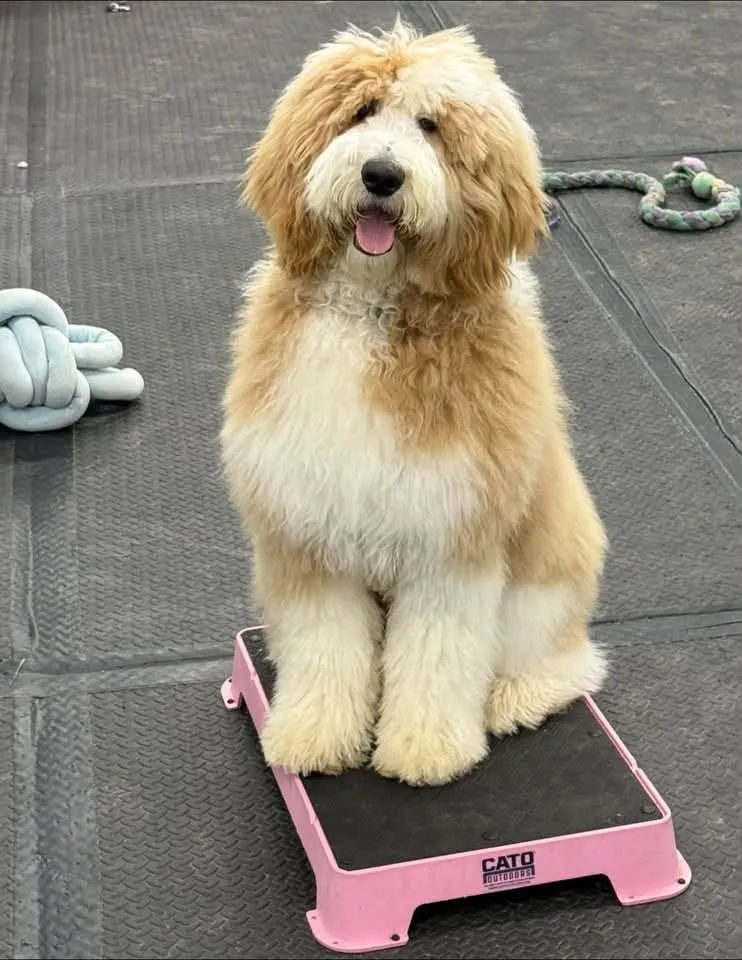

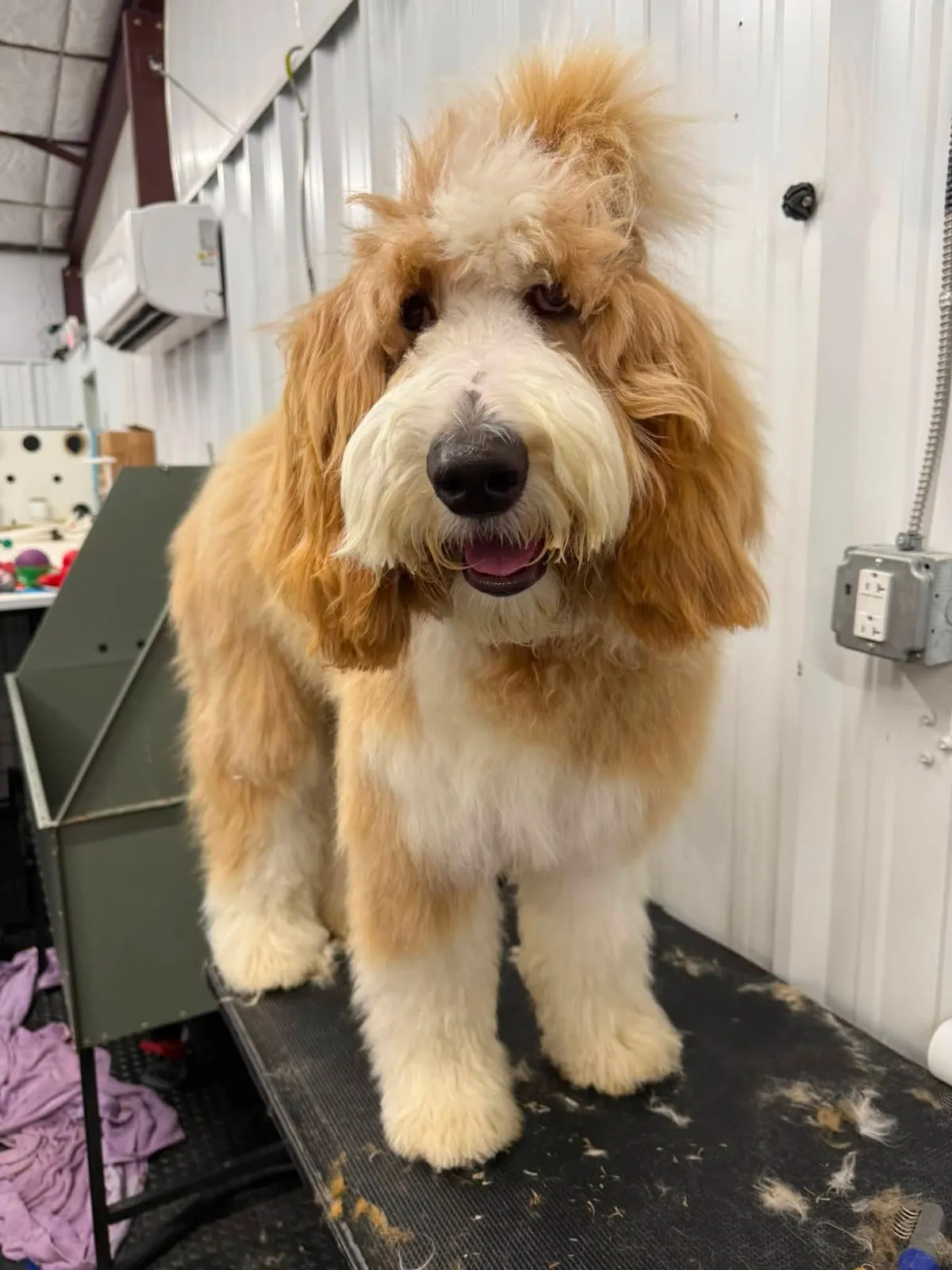
We can’t wait to welcome your dog to Day Training at Achieve Obedience Academy, where learning, enrichment, and care come together every day.
Availability and Pricing
SCHEDULE:
Monday through Saturday
No minimum attendance required
You choose how many days your dog attends
PRICING:
$45 per day base price: This includes enrichment, play, games, activities and nature walks.
ADD ONS:
$20 - Basic Obedience training throughout the day, or inclusion in our puppy training program. Training will be handled by our professional CPDT-KA trainers and will consist of multiple sessions a day working towards your dogs individual goals.
$30 - Behavior Modification: Does your dog have reactivity towards other dogs, need work on leash skills, have issues with noise sensitivity? We will design a specific program tailored towards your training goals and work with your dog daily.You choose how many days your dog attends
$45 - Specialized training tailored towards Service Dog students, sports work, and serious behavior modification.
Flexible scheduling makes Day Training easy to fit into your routine.
We can’t wait to welcome your dog to Day Training at Achieve Obedience Academy, where learning, enrichment, and care come together every day.
Frequently Asked Questions
What is Day Training?
Day Training is a structured, trainer-led program where your dog spends the day learning skills, practicing manners, and receiving enrichment under professional supervision. Unlike traditional doggy daycare, the focus is on training, confidence-building, enrichment, and encouraging calm behavior, not free-for-all play.
How is Day Training different from traditional doggy daycare?
Traditional daycare often relies on large group play to tire dogs out, which can be overwhelming or stressful for many dogs.
Day Training offers:
-Solo trainer-led group training sessions
-No uncontrolled group play
-Small, carefully managed groups
-Trainer-guided structure throughout the day
-Balanced mental enrichment, physical activity, and rest
Our goal is quality engagement, not chaos.
Will my dog play with other dogs?
No uncontrolled group play occurs during Day Training.
Dog-to-dog interaction is intentional, structured, and only conducted at the training staff's discretion for the purpose of teaching social skills during trainer-led group sessions. This allows dogs to learn calm coexistence, neutrality, and appropriate social skills without overstimulation.
What training methods do you use?
Lorem ipsum dolor sit amet, consectetur adipisicing elit. Autem dolore, alias, numquam enim ab voluptate id quam harum ducimus cupiditate similique quisquam et deserunt, recusandae.
What tools will be used on my dog?
Describe the item or answer the question so that site visitors who are interested get more information. You can emphasize this text with bullets, italics or bold, and add links.
Do you use shock collars, prong collars, or choke chains?
Describe the item or answer the question so that site visitors who are interested get more information. You can emphasize this text with bullets, italics or bold, and add links.
Can reactive, shy, or sensitive dogs attend Day Training?
Describe the item or answer the question so that site visitors who are interested get more information. You can emphasize this text with bullets, italics or bold, and add links.
How does body awareness and confidence training help my dog?
Describe the item or answer the question so that site visitors who are interested get more information. You can emphasize this text with bullets, italics or bold, and add links.
How often does my dog need to attend?
Describe the item or answer the question so that site visitors who are interested get more information. You can emphasize this text with bullets, italics or bold, and add links.
Do you offer pickup and drop-off?
Describe the item or answer the question so that site visitors who are interested get more information. You can emphasize this text with bullets, italics or bold, and add links.
Puppy-Specific Frequently Asked Questions
Describe the item or answer the question so that site visitors who are interested get more information. You can emphasize this text with bullets, italics or bold, and add links.
What is the critical socialization window?
Describe the item or answer the question so that site visitors who are interested get more information. You can emphasize this text with bullets, italics or bold, and add links.
What sanitation and cleaning protocols do you follow?
Describe the item or answer the question so that site visitors who are interested get more information. You can emphasize this text with bullets, italics or bold, and add links.
I’m overwhelmed—can Day Training Camp really help with raising my puppy?
Describe the item or answer the question so that site visitors who are interested get more information. You can emphasize this text with bullets, italics or bold, and add links.
Dog training is not a performance.
It’s a skill-based, science-driven process that requires education, experience, and accountability—not viral clips or reality TV dramatics. When choosing how to train your dog, trust peer-reviewed science and credentialed professionals over edited entertainment.
Dog training is
not a performance.
It’s a skill-based, science-driven process that requires education, experience, and accountability—not viral clips or reality TV dramatics. When choosing how to train your dog, trust peer-reviewed science and credentialed professionals over edited entertainment.
FOLLOW US


CUSTOMER CARE
OFFICE
Copyright 2026. Achieve Obedience Academy. All Rights Reserved.
FOLLOW US
CUSTOMER CARE
OFFICE
Copyright 2026. Achieve Obedience Academy. All Rights Reserved.